Cambridge IGCSE Biology 0610 Past Papers & Mark Schemes
Free CIE Biology 0610 question papers, mark schemes and examiner reports from 2021 to 2026 — Paper 4 Theory (Extended) and Paper 6 Alternative to Practical in every variant, organised by exam series. The same papers apply to the 9–1 graded 0970 syllabus.
For Paper 6, see the 10 tips that transform your IGCSE Biology Paper 6 score.
✓ 2021–2026 series✓ Variants 41–43 & 61–63✓ Examiner reports included✓ March, June & November
Cambridge IGCSE Biology Past Papers — Paper 4 Theory & Paper 6 ATP
Pick the paper type, year and exam series. You get every variant of that session in one view — question paper, mark scheme and the examiner report Cambridge published for the whole series. March exams have variant 2 only.
19
Organisms & their environment20
Human influences on ecosystems21
Biotechnology & genetic modification
Practical skills carry a full 20% of the grade on Paper 5 or 6, testing food tests, osmosis, enzyme rates, photosynthesis, transpiration, sampling, magnification calculations and clear line drawings — revise them as a topic in their own right, not an afterthought.
What do 41, 42, 43 and 61, 62, 63 actually mean?
The first digit is the paper; the second is the time-zone variant. Different variants, same syllabus, same difficulty.
41 / 61Variant 1 — administrative zone 1
42 / 62Variant 2 — zones 2 and 3, and the only variant in the March (India) series
43 / 63Variant 3 — zones 4 and 5, including the Gulf region
Because every variant assesses the identical syllabus, the smartest strategy is to practise all three variants of each session — it triples your question bank at the same difficulty level.
Test yourself — free Topic 1 quiz
Try a free interactive quiz on Topic 1, Characteristics of Living Organisms, before you open a full paper.
Characteristics of Living Organisms — trial quiz
Instant marking with explanations, built from real 0610 exam questions.
In "explain" answers, tie every point to a because-clause.
For "suggest" questions, apply known biology to the unfamiliar context — there is often more than one valid answer.
Cambridge IGCSE Biology 0610 — FAQs
What is the difference between 0610 and 0970?
They are the same Cambridge IGCSE Biology qualification with different grading scales: 0610 is graded A* to G and 0970 is graded 9 to 1. The syllabus content and papers are identical, so every past paper on this page is valid practice for both codes.
What do the paper codes 41, 42, 43, 61, 62 and 63 mean?
The first digit is the paper — 4 is Theory (Extended) and 6 is Alternative to Practical. The second digit is the time-zone variant. All variants of a session assess the same syllabus at the same standard.
Where are the Paper 2 multiple-choice papers?
This free archive focuses on Paper 4 and Paper 6, which carry 70% of the grade. For Paper 2 MCQ practice, the classified past papers sort every Paper 2, 4 and 6 question by syllabus topic with answers.
Is Paper 6 easier than Paper 5?
Neither is easier — both test the same experimental skills and the same assessment objective for 20% of the grade. Paper 5 is a hands-on laboratory test lasting 1 hour 15 minutes, while Paper 6 is a 1-hour written Alternative to Practical. Your school decides which one you sit.
Should I sit Core or Extended?
Core (Papers 1 and 3) can achieve grades C to G at most, while Extended (Papers 2 and 4) opens the full A* to G range. If you are targeting a grade C or above, Cambridge recommends the Extended tier.
Are these Cambridge Biology past papers free with answers?
Yes. Every question paper is paired with its official Cambridge mark scheme, and each series includes the examiner report explaining where candidates lost marks.
See how the Biology course combines lessons, concise notes, quizzes, flashcards and past-paper questions. The video gives you a clear study sequence, from learning a chapter to practising the exact language and skills needed in exam answers.
Stop revising topic by textbook. Revise topic by exam question.
The classified past papers gather every Cambridge 0610 question — Papers 2, 4 and 6 — under its syllabus topic with answers, so each weak topic gets fixed with the exact questions Cambridge asks.

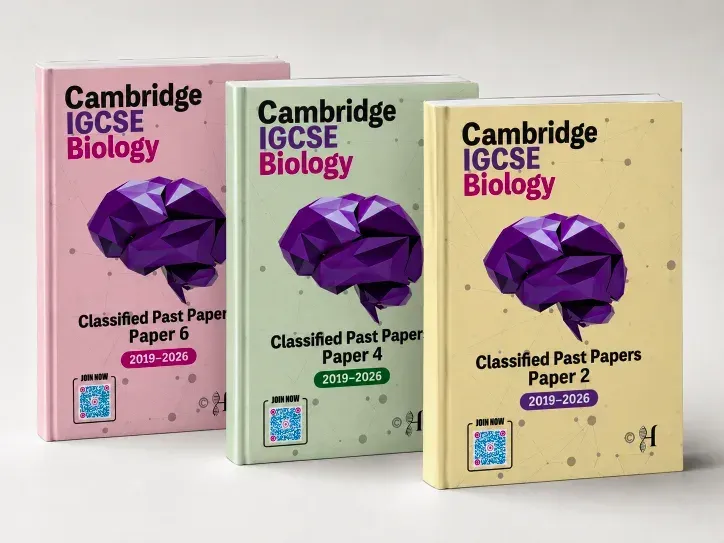 Classified Past Papers by Topic
Every 0610 question from Papers 2, 4 and 6 sorted under its syllabus topic with answers — the fastest way to fix a weak topic.
See the classified papers →
Full course
Classified Past Papers by Topic
Every 0610 question from Papers 2, 4 and 6 sorted under its syllabus topic with answers — the fastest way to fix a weak topic.
See the classified papers →
Full course
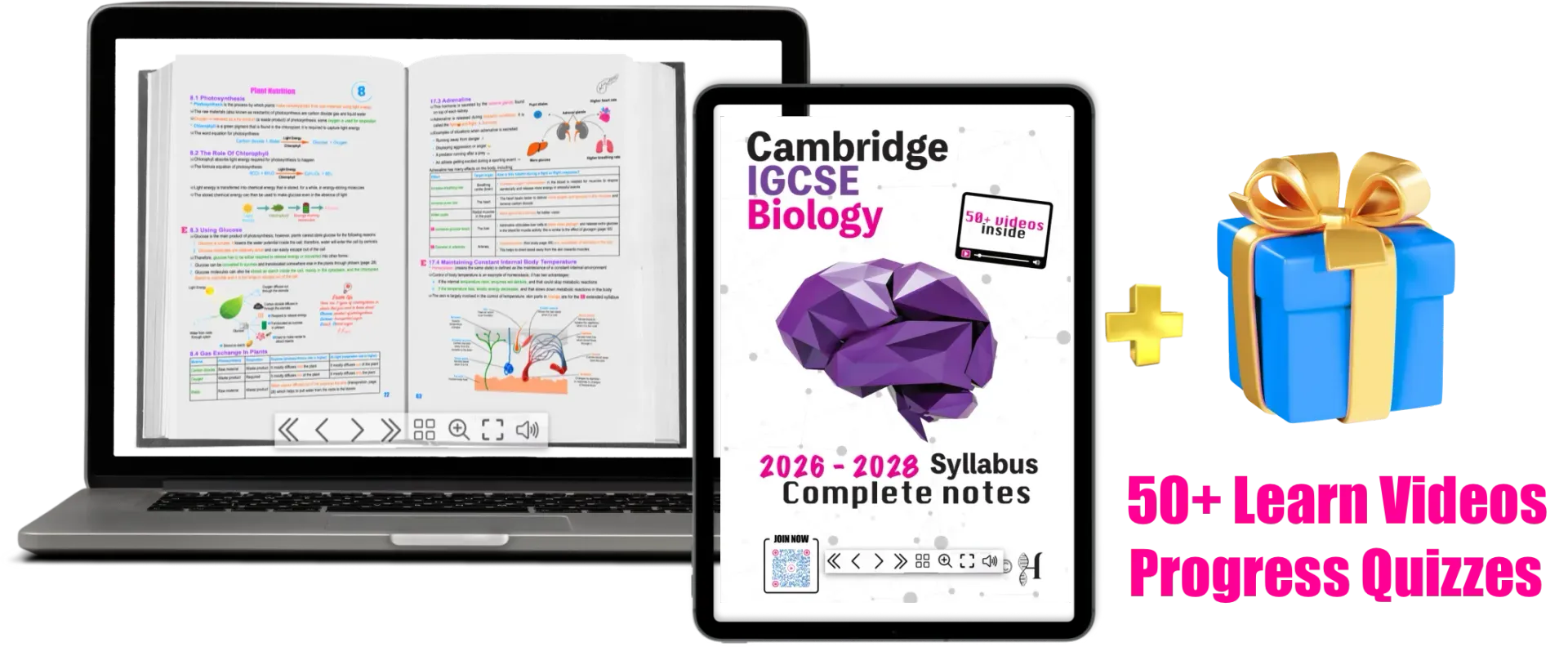 IGCSE Biology Course & Notes
Recorded lessons and syllabus-matched notes covering all 21 topics of the latest 0610 syllabus, Core and Supplement clearly separated.
Explore the Biology course →
IGCSE Biology Course & Notes
Recorded lessons and syllabus-matched notes covering all 21 topics of the latest 0610 syllabus, Core and Supplement clearly separated.
Explore the Biology course →
