
IGCSE Online Tuition for the February/March 2027 Biology Exams: Week-by-Week Class Schedule
Live online IGCSE Biology classes twice a week at 5 pm Kuwait (7:30 pm IST), with every 0610 topic finished before the first paper on 3 February.

TL;DR
Yes, IGCSE online tuition can finish the whole Biology syllabus before the February/March 2027 exams, and this post shows you the week it happens. My live Cambridge IGCSE Biology 0610 classes run every Wednesday and Thursday at 5 pm Kuwait time (7:30 pm in India), one session for the content and the next for exam questions on it. All 21 syllabus topics are taught by 21 January 2027, leaving a full-paper week before the exam window opens on 3 February. Last cycle, around 12 students sat with me and every one of them scored a B or above. If you are deciding before Cambridge's final entry deadline on 27 November, the schedule below tells you exactly what your child would cover and when.
On this page
- Will IGCSE online tuition finish the Biology syllabus before the February/March 2027 exams?
- Three dates to decide by: entry deadlines and the first paper
- How the two-session loop works
- Week-by-week class schedule to 3 February 2027
- What the evidence says about how much tuition is enough
- How do live classes prepare for Paper 6 online?
- Joining in November or December: the catch-up plan
- FAQ
Will IGCSE online tuition finish the Biology syllabus before the February/March 2027 exams?
Yes. In my live IGCSE Biology course the last of the 21 syllabus topics is taught on 21 January 2027, thirteen days before the March series exam period opens on 3 February. Cambridge confirms in the 0610 syllabus for 2026–2028 that the exams are available in the March series in India, and the key dates for the March 2027 series put the exam period at 3 February to 4 March 2027.
This is the question I get asked more than any other by parents in India, and I understand why. The February/March series is early. Many schools are still teaching new content in January, and a child who is also sitting Chemistry, Physics and Maths cannot afford a Biology course that is still on inheritance when the first paper lands.
So I plan the whole year backwards from 3 February. Two sessions a week, 90 minutes each, from the second week of September. Content first, practice the next day, a half-syllabus mock in December, then timed full papers in the final week of January. The dates are in the schedule table further down.
One thing I should say plainly: the syllabus itself is not the problem. Twenty-one topics in twenty weeks is a comfortable pace for a Year 11 student. What costs students marks in March is not unfinished content, it is unpractised exam technique, which is why half of every week in my class is spent on questions rather than notes.
Three dates to decide by: entry deadlines and the first paper
Your decision about tuition sits in front of three Cambridge dates: final entries on 27 November 2026, late entries on 14 December 2026, and the first exam on 3 February 2027. Cambridge lists all three, plus results on 13 May 2027, in its March 2027 series calendar.
Parents sometimes treat the entry deadline and the tuition decision as separate things. They are not. By 27 November your school will have told Cambridge which tier your child is entered for, and that tier decides the papers and the grades available. In the 0610 syllabus, Core candidates sit Papers 1 and 3 and can reach a maximum of grade C, while Extended candidates sit Papers 2 and 4 and are eligible for A* to G. If you want the Extended entry, the time to show the school your child can cope with Extended questions is October and November, not January.
For the paper-by-paper dates, grade thresholds from March 2026 and a 16-week self-study plan, see my separate guide to the February/March 2027 Biology dates, grade targets and preparation plan. This post is about the live class, so I will not repeat those tables here.
How the two-session loop works
Every topic gets two live sessions. On Wednesday I teach the content and the terms the mark scheme expects, and on Thursday we solve Paper 4 and Paper 6 questions on that same topic while you work through Paper 2 multiple-choice questions with me watching.
The reason for the split is simple. A student can nod through an explanation of osmosis and still lose four marks the next day because the question said "describe" and they wrote "explain". The Thursday session catches that while the content is still fresh. We use real past-paper questions from my solved IGCSE Biology past papers, I mark on screen, and every student sees where the marks were earned and where they slipped.
Classes are capped at 14 students. Last cycle I had around 12, which is small enough that I know who is quiet because they understand and who is quiet because they are lost. Every assignment is marked by me, and the feedback goes to the student and the parent, not only the student.
Why 5 pm Kuwait works from India
Kuwait is UTC+3 and India is UTC+5:30, so 5 pm in Kuwait is 7:30 pm in India. For a Year 11 student that is after school, after sport and before the evening gets late. Biology runs Wednesday and Thursday at that time. If your child is also taking Chemistry, those classes run Sunday at 5 pm Kuwait (7:30 pm IST) and Monday at 7 pm Kuwait (9:30 pm IST), so the two subjects never clash.
| Subject | Content session | Practice session | India time |
|---|---|---|---|
| IGCSE Biology 0610 | Wednesday, 5 pm Kuwait | Thursday, 5 pm Kuwait | 7:30 pm IST both days |
| IGCSE Chemistry 0620 | Sunday, 5 pm Kuwait | Monday, 7 pm Kuwait | 7:30 pm IST Sunday, 9:30 pm IST Monday |
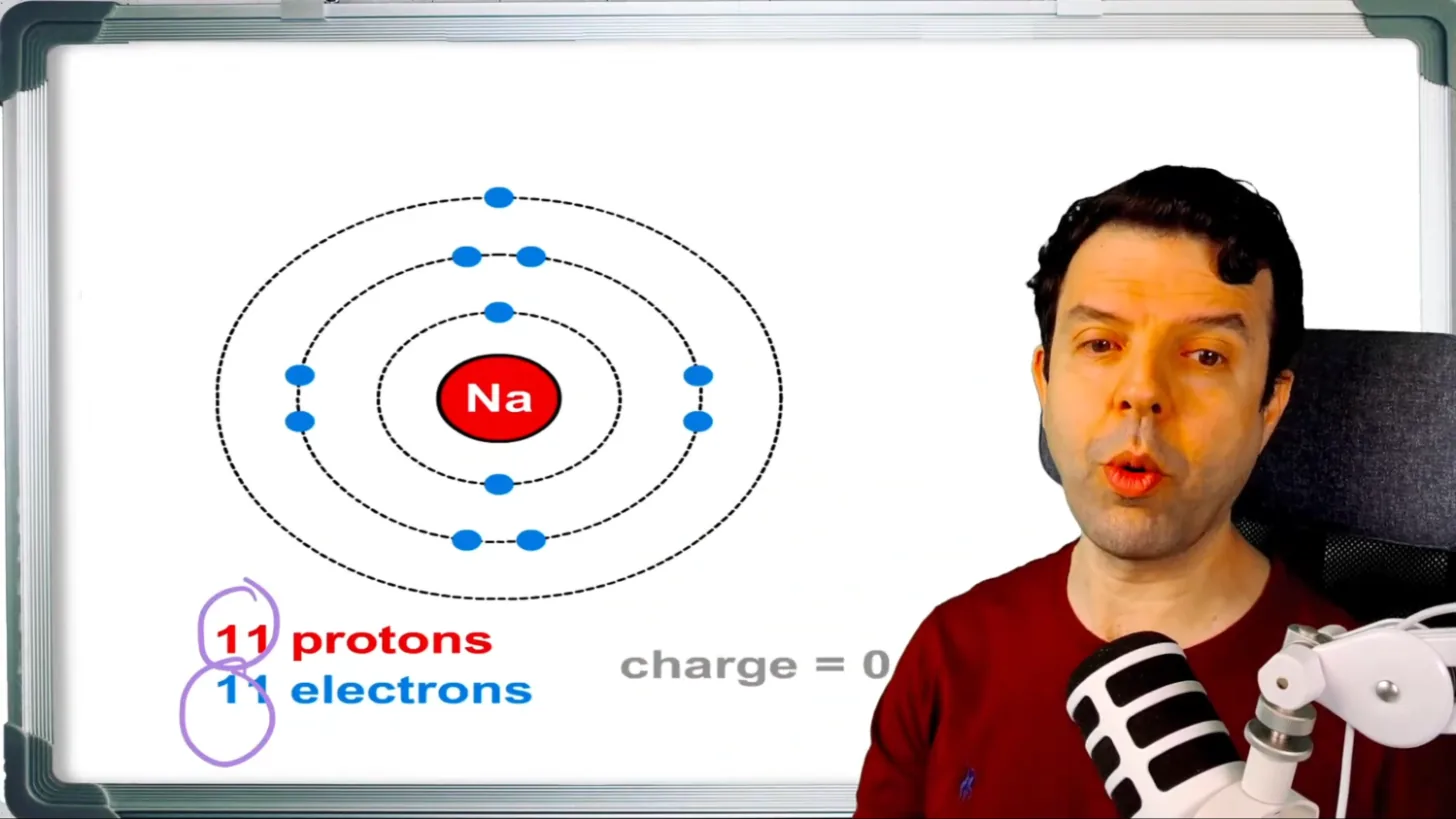
From a recent live IGCSE Chemistry class on ionic bonding: the Sunday content session builds the atom before the ion, and Monday's practice session turns it into exam questions.
Week-by-week class schedule to 3 February 2027
The table below is the Biology teaching plan for the February/March 2027 series, built so that topic 21 is finished on 21 January and the final week before the exam period is given to full timed papers. Topic numbers follow the Cambridge 0610 syllabus.
| Week starting (Wed) | Topics taught (Wed) and practised (Thu) | Paper focus |
|---|---|---|
| 9 Sep 2026 | 1 Characteristics and classification of living organisms | Paper 2 |
| 16 Sep | 2 Organisation of the organism | Paper 2, Paper 6 drawings begin |
| 23 Sep | 3 Movement into and out of cells | Paper 4, Paper 6 (osmosis investigation) |
| 30 Sep | 4 Biological molecules | Paper 2, Paper 6 (food tests) |
| 7 Oct | 5 Enzymes | Paper 4, Paper 6 (enzyme investigation) |
| 14 Oct | 6 Plant nutrition | Paper 4, Paper 6 (photosynthesis investigation) |
| 21 Oct | 7 Human nutrition | Paper 2, Paper 4 |
| 28 Oct | 8 Transport in plants | Paper 4, Paper 6 |
| 4 Nov | 9 Transport in animals | Paper 4 |
| 11 Nov | 10 Diseases and immunity | Paper 2, Paper 4 |
| 18 Nov | 11 Gas exchange in humans and 12 Respiration | Paper 6 (anaerobic respiration investigation) |
| 25 Nov | 13 Excretion in humans | Paper 4 — final entries 27 Nov |
| 2 Dec | 14 Coordination and response | Paper 4 |
| 9 Dec | December mock on topics 1–12 (half the syllabus), marked with feedback to parents | Papers 2, 4 and 6 |
| 16 Dec | 15 Drugs and 16 Reproduction (part 1) | Paper 2, Paper 4 |
| 23 Dec | 16 Reproduction (part 2) | Paper 4 |
| 30 Dec | 17 Inheritance | Paper 4 (genetic diagrams) |
| 6 Jan 2027 | 18 Variation and selection | Paper 2, Paper 4 |
| 13 Jan | 19 Organisms and their environment | Paper 6 (sampling and data handling) |
| 20 Jan | 20 Human influences on ecosystems and 21 Biotechnology and genetic modification — syllabus complete 21 Jan | Paper 4 |
| 27 Jan | Full timed papers: Paper 2, Paper 4 and Paper 6, marked and returned | All papers |
| 3 Feb | Exam period opens | — |
The December mock is the check-point I care about most. It covers the first twelve topics, it is sat under exam conditions, and the marked script with my comments goes to the student and the parent. That is the moment to settle any Extended-tier doubts, five days before late entries close and eight weeks before the first paper.
Full-paper mocks are not limited to that one week. Any student can ask for a full timed paper at any point in the year and I will mark it and send feedback. In practice the students who use this most are the ones who join after the term has started, which I come to below.
What the evidence says about how much tuition is enough
Small-group tuition adds about four months of progress over a school year, according to the Education Endowment Foundation's Teaching and Learning Toolkit, which rates the evidence as moderate across 62 studies. The same summary says the greatest impact comes from frequent sessions, around three a week of up to an hour, over about ten weeks, and that tuition works best when it is targeted at a pupil's specific needs.
I want to be straight with you about how my class measures against that. Two 90-minute sessions a week is three hours of live contact, which matches the weekly hours the EEF describes, spread across two evenings instead of three. The group size is larger than the two-to-five the toolkit studies, which is why I cap at 14 and why the marking is individual: the targeting the EEF talks about happens in the written feedback on each student's script, not in the whole-class explanation.
Where the research and my experience agree completely is on duration. Ten weeks of intensive practice is the minimum that moves a grade. That is exactly why the schedule finishes content in January and why the practice sessions start in September rather than being bolted on at the end.
How do live classes prepare for Paper 6 online?
Paper 6, the Alternative to Practical, is worth 20% of the final grade in the 0610 syllabus, and the skills it tests, biological drawings, graphs, tables and planning an investigation, cannot be crammed in January. In my class they are built from the second week of September, one skill at a time, inside the Thursday practice sessions.
A drawing done online is marked the same way as one done on paper, so I teach it the same way. Students draw on paper, photograph the drawing, and I mark it on screen in front of the group: clean single lines, no shading, a sensible magnification, label lines that touch the structure. The same goes for graphs. By November every student has had their axes, scales and best-fit lines corrected in public enough times that they stop making the errors.
The investigation questions are where most Paper 6 marks are lost, and the planning question is the worst of them. I teach one method and we drill it: name the independent variable, name the dependent variable, list two or three variables to control, write a safety precaution, and repeat the measurement, ideally five times, for reliability. The investigations that come up most, enzymes, anaerobic respiration and photosynthesis, each get their own Thursday in the schedule above.
If you want to see what a fully worked Paper 6 looks like before you decide, my solved Paper 6 flipbook shows every question of a recent paper answered the way the mark scheme wants to see it. Last cycle several of my students came out of Paper 6 with marks close to full, and one went from a D in the mid-year mock to a 9 (A*) in the final, with full marks on Paper 6.
Joining in November or December: the catch-up plan
Students who join after September get a catch-up programme built from the recorded sessions they missed and a set of assignments on those topics, so they reach the live class at the same point as everyone else. Most of the catch-up is done in about a week, and I mark the assignments before the student joins live so I know they are ready.
I would rather you joined in November than not at all. The recordings cover the Wednesday content sessions in full, and the assignments stand in for the Thursday practice, with my written feedback replacing the live marking. Parents are asked to make sure the programme is completed, because a student who arrives in the live class having skipped the recordings is the one who struggles.
The fee is a single payment for the whole course to the exams. There is a generous discount for students who take Biology and Chemistry together, which many of my February/March students do because the Sunday and Monday Chemistry sessions sit on different evenings from Biology. The IGCSE Biology notes eBook is what we work from in class, so you will want a copy whichever route you choose.
Families who have studied Biology with me say much the same. Zainab Al-Zahrani, a parent in Saudi Arabia whose son scored an A*, wrote that after trying many websites she found Chem Bio on YouTube and it helped her son a lot with Biology. Ali El-Khateeb in Egypt, who took his school's top mark, said what impressed him most was how fast questions were answered on WhatsApp and email. In the June 2026 session, 74% of my IGCSE Biology students scored A or A*, 19% scored B and 5% scored C.
If you want to check that the schedule fits your child before the 27 November deadline, send me a message on WhatsApp at +965 5137 5709 or email [email protected] and I will tell you where the class is and what the catch-up would involve.
FAQ
Will online IGCSE Biology tuition finish the syllabus before the February/March 2027 exams? Yes. In my live class the last of the 21 topics is taught on 21 January 2027, and the exam period does not open until 3 February.
What time are the live IGCSE Biology classes in India? Classes run Wednesday and Thursday at 5 pm Kuwait time, which is 7:30 pm IST. Chemistry runs Sunday at 7:30 pm IST and Monday at 9:30 pm IST.
Can my child join IGCSE online tuition in November or December? Yes, with a catch-up programme of recorded sessions and marked assignments that is usually completed in about a week. Late entries for the March 2027 series close on 14 December, so the tuition decision should come before then.
How many students are in each live IGCSE class? The cap is 14 and last cycle there were around 12. Every assignment and mock is marked by me, with feedback sent to both the student and the parent.
Try a free Class


